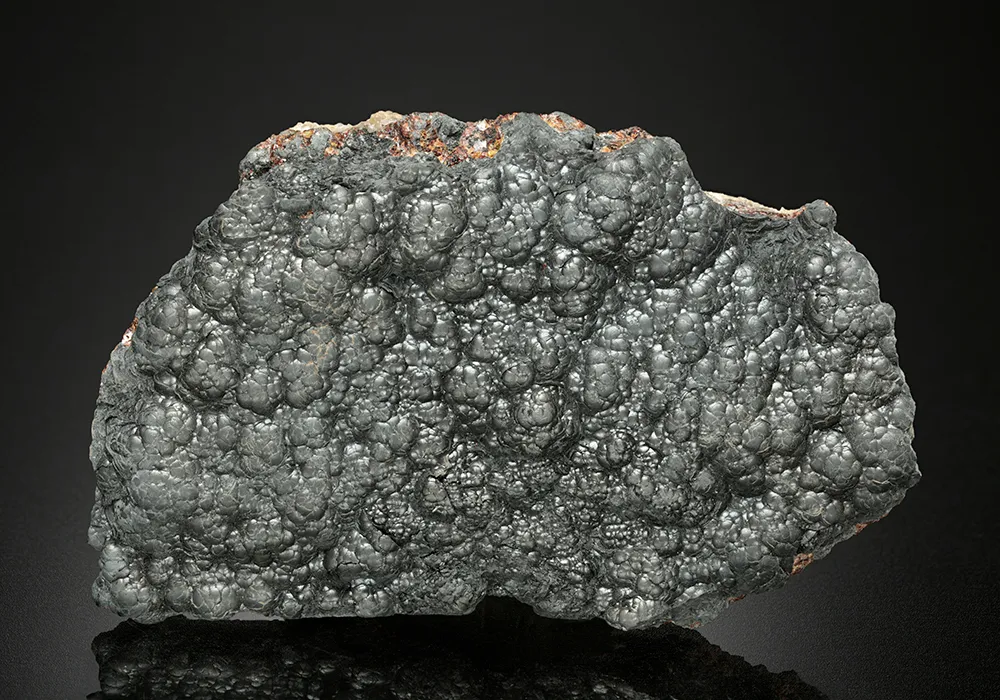
risques-niger.org – Arsenic (As) is a chemical element with the atomic number 33, located in Group 15 (the nitrogen group) of the periodic table. It is a metalloid, exhibiting properties of both metals and non-metals. Arsenic has a rich history and a diverse range of applications, from ancient times to modern technology. This article delves into the physical and chemical properties of arsenic, its occurrence, and its various compounds.
Physical Properties
Arsenic exists in several allotropic forms, including gray (or metallic), yellow, and black arsenic. The most stable form at room temperature is gray arsenic, which is a brittle, crystalline solid with a metallic luster. It has a density of 5.73 g/cm³, a melting point of 814°C, and a boiling point of 615°C (at which it sublimes).
Chemical Properties
Arsenic is a reactive element, capable of forming compounds in various oxidation states, primarily +3 and +5. It readily reacts with non-metals such as oxygen, sulfur, and halogens. For instance, arsenic reacts with concentrated nitric acid to form arsenic acid (H₃AsO₄) and with dilute nitric acid to produce arsenious acid (H₃AsO₃). Arsenic also forms arsenides with metals and arsenates with oxygen.
Occurrence
Arsenic is a naturally occurring element, widely distributed in the Earth’s crust. It is found in various minerals, including arsenopyrite (FeAsS), realgar (AsS), and orpiment (As₂S₃). Arsenic can also be found in groundwater, soil, and air, often as a result of natural processes or human activities such as mining and industrial emissions.
Production
Arsenic is primarily produced as a byproduct of copper, gold, and lead smelting. The most common method involves roasting arsenopyrite to produce arsenic trioxide (As₂O₃), which is then reduced to elemental arsenic using carbon or hydrogen.
Compounds of Arsenic
Arsenic forms a wide range of compounds, which can be broadly classified into inorganic and organic arsenic compounds.
Inorganic Arsenic Compounds
Inorganic arsenic compounds are highly toxic and include:
- Arsenic Trioxide (As₂O₃): Also known as white arsenic, it is a white, crystalline solid used in glass manufacturing and as a pesticide.
- Arsenious Acid (H₃AsO₃): A weak acid that forms arsenites (AsO₃³⁻) in solution.
- Arsenic Pentoxide (As₂O₅): A white solid used in the production of arsenic acid.
Organic Arsenic Compounds
Organic arsenic compounds are generally less toxic than their inorganic counterparts and include:
- Methylarsonic Acid (CH₃AsO(OH)₂): Found in some seafood, it is less toxic than inorganic arsenic compounds.
- Dimethylarsinic Acid (CH₃)₂AsO(OH): Also known as DMA, it is a metabolite of inorganic arsenic in the human body.
Applications
Arsenic has various applications across different industries:
- Semiconductors: High-purity arsenic is used in the production of gallium arsenide (GaAs), a compound semiconductor used in LEDs and solar cells.
- Pharmaceuticals: Some organic arsenic compounds are used in medications, such as arsenic trioxide in the treatment of acute promyelocytic leukemia.
- Pesticides and Wood Preservatives: Historically, arsenic has been used in pesticides and wood preservatives, although its use in these applications is now heavily regulated due to its toxicity.
Toxicity and Health Effects
Arsenic is highly toxic, particularly in its inorganic forms. Exposure to arsenic can lead to acute and chronic health effects, including skin lesions, cancer, cardiovascular disease, and neurological disorders. Long-term exposure through contaminated water and food is a significant public health concern in many parts of the world.
Conclusion
Arsenic is a versatile element with a complex chemistry and a wide range of applications. Understanding its properties and compounds is crucial for both its safe use in various industries and for mitigating its toxic effects on human health and the environment.