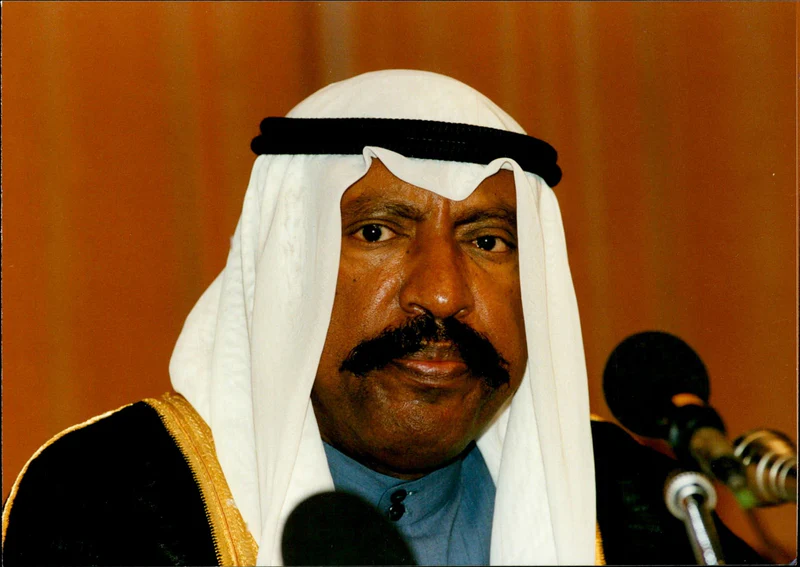
Emir Saad Al-Abdullah Al-Salim Al-Sabah (2006)

risques-niger.org – Emir Saad Al-Abdullah Al-Salim Al-Sabah’s reign in 2006 was the shortest in the history of Kuwait, lasting just nine days. His accession followed the death of his half-brother, Emir Jaber Al-Ahmad Al-Sabah, but due to serious health issues, Emir Saad was unable to fully assume the responsibilities of leadership. Despite the brevity of his reign, Emir Saad had a long and distinguished career in Kuwaiti politics, serving as Crown Prince and Prime Minister for nearly three decades prior to his brief time as emir. His role in Kuwait’s political and security landscape, especially during the Iraqi invasion, left a lasting impact on the nation.

Early Life and Political Career

Saad Al-Abdullah Al-Salim Al-Sabah was born in 1930 into the ruling Al-Sabah family. Like many members of Kuwait’s royal family, Saad received a traditional education and later joined the military, where he trained both domestically and abroad. His early military career helped shape his understanding of defense and security, which would become central to his future roles in government.

In 1965, he was appointed as Kuwait’s Minister of Interior, a role in which he gained a reputation for enhancing the country’s internal security and police force. In 1967, he was also appointed as Minister of Defense, further solidifying his influence in Kuwait’s security affairs.

His experience in these key ministries led to his appointment as Crown Prince in 1978 by his half-brother, Emir Jaber Al-Ahmad Al-Sabah. Along with the title of Crown Prince, Saad also served as Prime Minister, a position he held for nearly 25 years, overseeing the day-to-day operations of the government.

Role During the Iraqi Invasion

One of the defining moments of Emir Saad’s career was his role during the Iraqi invasion of Kuwait in 1990. As Prime Minister, Saad played a key part in organizing Kuwait’s government-in-exile and maintaining the unity of the Kuwaiti people during this period of occupation. He worked closely with Emir Jaber to rally international support for Kuwait’s liberation, meeting with world leaders and advocating for the restoration of Kuwait’s sovereignty.

Following the liberation of Kuwait in 1991, Saad was instrumental in the reconstruction efforts, working to rebuild the country’s infrastructure and restore normalcy after the devastation of the war. His contributions during this critical time earned him the respect and admiration of the Kuwaiti people.

Ascension to the Throne

After the death of Emir Jaber Al-Ahmad Al-Sabah on January 15, 2006, Saad Al-Abdullah Al-Salim Al-Sabah, as Crown Prince, was next in line to ascend the throne. He was officially named the new Emir of Kuwait on January 15, 2006. However, by the time of his ascension, Emir Saad was already in poor health, having suffered from debilitating medical issues for several years.

As his health deteriorated, it became clear that Emir Saad would not be able to fulfill the duties required of the head of state. His ability to communicate and lead was severely compromised, leading to a constitutional crisis. The Kuwaiti parliament convened to address the issue, and after several days of deliberations, it became apparent that Emir Saad’s medical condition would prevent him from effectively governing the country.

Abdication and Succession

On January 24, 2006, just nine days after becoming emir, Saad Al-Abdullah Al-Salim Al-Sabah officially abdicated the throne, making his reign the shortest in Kuwait’s history. The decision was made in the best interest of the nation, and Emir Saad agreed to step down to allow for a smooth transition of power.

Following his abdication, the Kuwaiti parliament confirmed Sheikh Sabah Al-Ahmad Al-Jaber Al-Sabah, the long-serving Foreign Minister and half-brother of the late Emir Jaber, as the new ruler of Kuwait. Sheikh Sabah had already been acting as de facto leader during Emir Saad’s brief reign due to his experience and leadership within the government.

Legacy and Later Life

Despite his short reign, Emir Saad Al-Abdullah Al-Salim Al-Sabah’s legacy extends far beyond his brief time as ruler. His long tenure as Crown Prince and Prime Minister, particularly during the Iraqi invasion, left a lasting mark on Kuwait’s political history. He is remembered for his dedication to the country’s security, his leadership during the Gulf War, and his role in rebuilding Kuwait after the war.

Following his abdication, Emir Saad retired from public life, living quietly until his death on May 13, 2008, at the age of 78. His passing marked the end of an era for Kuwait, as he had been a prominent figure in the country’s political life for more than four decades.

Conclusion

Although Emir Saad Al-Abdullah Al-Salim Al-Sabah’s reign was the shortest in Kuwaiti history, his contributions to the country’s development and security cannot be overlooked. His leadership during the Iraqi invasion and his long service as Crown Prince and Prime Minister made him a key figure in Kuwait’s modern history. Emir Saad’s legacy is one of resilience, service, and dedication to the welfare of the Kuwaiti people, and he is remembered with respect and gratitude for his long-standing commitment to his country.

Østjylland: The Vibrant East of Denmark A Tapestry of Coast

risques-niger.org – Østjylland, or East Jutland, is a dynamic region in Denmark, renowned for its stunning coastline, rich cultural heritage, and vibrant cities. It’s a region where ancient history meets modern innovation, and where natural beauty blends seamlessly with urban life.

A Coastal Paradise

Østjylland boasts a breathtaking coastline, with sandy beaches, dramatic cliffs, and picturesque harbors.

  • Djursland: This peninsula offers stunning coastal scenery, charming towns, and exciting outdoor activities.
  • Ebeltoft: A charming coastal town with a historic Viking ship museum.   
  • Mols Bjerge National Park: A beautiful national park with hiking trails, scenic viewpoints, and diverse wildlife.   
  • Aarhus Riviera: A stretch of coastline south of Aarhus, known for its beautiful beaches and seaside resorts.

A Cultural Hub

Østjylland is a cultural powerhouse, with a rich history, vibrant arts scene, and world-class museums.

  • Aros Aarhus Kunstmuseum: A modern art museum with a unique rainbow panorama.   
  • Den Gamle By: An open-air museum that showcases Danish history and culture. 
  • Aarhus: Denmark’s second-largest city, Aarhus is a vibrant and cosmopolitan city with a thriving arts scene, world-class museums, and a beautiful waterfront.
  • Viborg: A historic city with a stunning cathedral and a rich Viking heritage.  

A Taste of Østjylland

Østjylland offers a diverse culinary scene, with a focus on fresh, local ingredients.

  • Smørrebrød: Open-faced sandwiches are a Danish staple, and Østjylland offers unique variations with local ingredients.
  • Fiskekasser: Traditional fish shops offer a wide variety of fresh seafood, including herring, cod, and mackerel.
  • Æbleskiver: Danish pancakes are a popular dessert, especially during the winter months.

Whether you’re exploring the stunning coastline, visiting historic towns, or experiencing the vibrant city life, Østjylland offers a truly unforgettable experience.

The Legend of Suriyothai (2001): Thai History and Heroism

risques-niger.org – “The Legend of Suriyothai,” directed by Chatrichalerm Yukol and released in 2001, stands as a monumental cinematic achievement in Thai film history. This epic historical drama chronicles the life and legacy of Queen Suriyothai, a figure revered in Thai culture for her bravery and sacrifice during the Ayutthaya period. The film is celebrated for its grand scale, lavish production, and its role in bringing Thai history to life on the big screen.

Plot Summary

Set in 16th-century Siam, “The Legend of Suriyothai” follows the story of Suriyothai, a noblewoman who rises to become a queen. The film navigates the political intrigues and conflicts of the Ayutthaya Kingdom, focusing on the internal and external threats that challenge its stability. Suriyothai emerges as a courageous leader, ultimately making the ultimate sacrifice to protect her kingdom from Burmese invaders. The narrative weaves together personal and political drama, portraying the complex dynamics of power and loyalty.

Themes and Analysis

The film explores themes of patriotism, leadership, and self-sacrifice, highlighting the role of women in history. Suriyothai’s journey from a noblewoman to a national heroine underscores the impact of individual bravery on the course of history. The film also delves into the intricacies of court politics and the challenges of maintaining sovereignty in a turbulent era, offering insights into the cultural and historical context of Thailand.

Direction and Cinematography

Chatrichalerm Yukol’s direction is ambitious and meticulous, bringing a rich historical tapestry to life with authenticity and grandeur. The film’s production values are impressive, featuring elaborate costumes, detailed set designs, and large-scale battle sequences that capture the epic scope of the story. The cinematography enhances the visual storytelling, with sweeping panoramas and intimate close-ups that immerse viewers in the world of the Ayutthaya Kingdom.

Performances

The cast delivers strong performances, with M.L. Piyapas Bhirombhakdi portraying Suriyothai with grace and strength. Her performance captures the queen’s resilience and determination, making her a compelling and relatable figure. The supporting cast, including established Thai actors, contributes to the film’s depth and authenticity, bringing historical figures to life with nuance and complexity.

Conclusion

“The Legend of Suriyothai” is a landmark film that combines historical drama with epic storytelling, celebrating the legacy of a national heroine. Its depiction of courage, sacrifice, and leadership resonates with audiences, offering a window into a pivotal era in Thai history. For those interested in historical epics and cultural narratives, “The Legend of Suriyothai” provides a captivating and educational cinematic experience that honors the spirit of its legendary protagonist.

A Reflection of its History: The Architecture of Montenegro

risques-niger.org – Montenegro, with its rich history spanning centuries, boasts a diverse architectural landscape that reflects its complex past. From ancient Illyrian settlements to medieval fortresses and modern coastal resorts, the country’s architecture tells a story of cultural influences, resilience, and adaptation. This article explores the various architectural styles found in Montenegro and their historical significance.

Ancient and Medieval Architecture

Illyrian and Roman Influences

The earliest architectural traces in Montenegro can be found in the ruins of Illyrian settlements. These ancient structures, often built on hilltops for defense, are a testament to the region’s early inhabitants. Roman influence is evident in cities like Doclea, where ruins of a Roman town and a basilica can still be seen, showcasing the engineering and architectural prowess of the Roman Empire.

Medieval Fortresses and Monasteries

The medieval period in Montenegro is marked by the rise of fortified towns and monasteries. The Kotor region, a UNESCO World Heritage Site, features well-preserved medieval architecture, including the Kotor Cathedral and the fortress of San Giovanni. These structures are characterized by their defensive features and the integration of Byzantine and Romanesque elements.

Montenegro’s monasteries, such as the Pobori and Moraca monasteries, are not only architectural marvels but also spiritual and cultural centers. Built during the Nemanjić dynasty, these monasteries reflect the Orthodox Christian influence and are adorned with frescoes dating back to different centuries.

Ottoman and Venetian Architecture

Ottoman Influence

The Ottoman Empire’s rule over Montenegro left a distinct architectural legacy. The city of Ulcinj, with its Ottoman-style houses and the Ulcinj Castle, offers a glimpse into this period. The Ottomans introduced new building techniques and styles, including the use of pointed arches, domes, and intricate tilework.

Venetian Influence

The Venetian Republic also played a significant role in Montenegro’s architectural history. The coastal towns of Kotor, Budva, and Herceg Novi bear the marks of Venetian influence, with their fortified walls, narrow streets, and Gothic and Renaissance-style buildings. The Venetian influence is particularly evident in the architecture of the Kotor Old Town, which is a masterpiece of medieval urbanism.

Modern and Contemporary Architecture

20th Century Developments

The 20th century saw significant changes in Montenegro’s architectural landscape. The country’s integration into Yugoslavia led to the development of modernist and socialist-realist architecture, with examples found in the capital, Podgorica. The Millennium Bridge, a modern cable-stayed bridge, is a symbol of Montenegro’s transition to a modern state and its embrace of contemporary architectural designs.

Sustainable and Eco-Friendly Designs

In recent years, Montenegro has focused on sustainable and eco-friendly architectural designs, especially in its coastal regions. Luxury resorts and private villas are being built with an emphasis on blending with the natural environment, using local materials, and incorporating green technologies.

Conclusion

Montenegro’s architecture is a living museum of its history, showcasing the country’s rich cultural heritage and the influences of various civilizations. From ancient ruins to modern eco-resorts, the architectural landscape of Montenegro reflects its journey from ancient tribal settlements to a modern European state. Preserving and celebrating this architectural diversity is crucial for understanding Montenegro’s past and shaping its future.